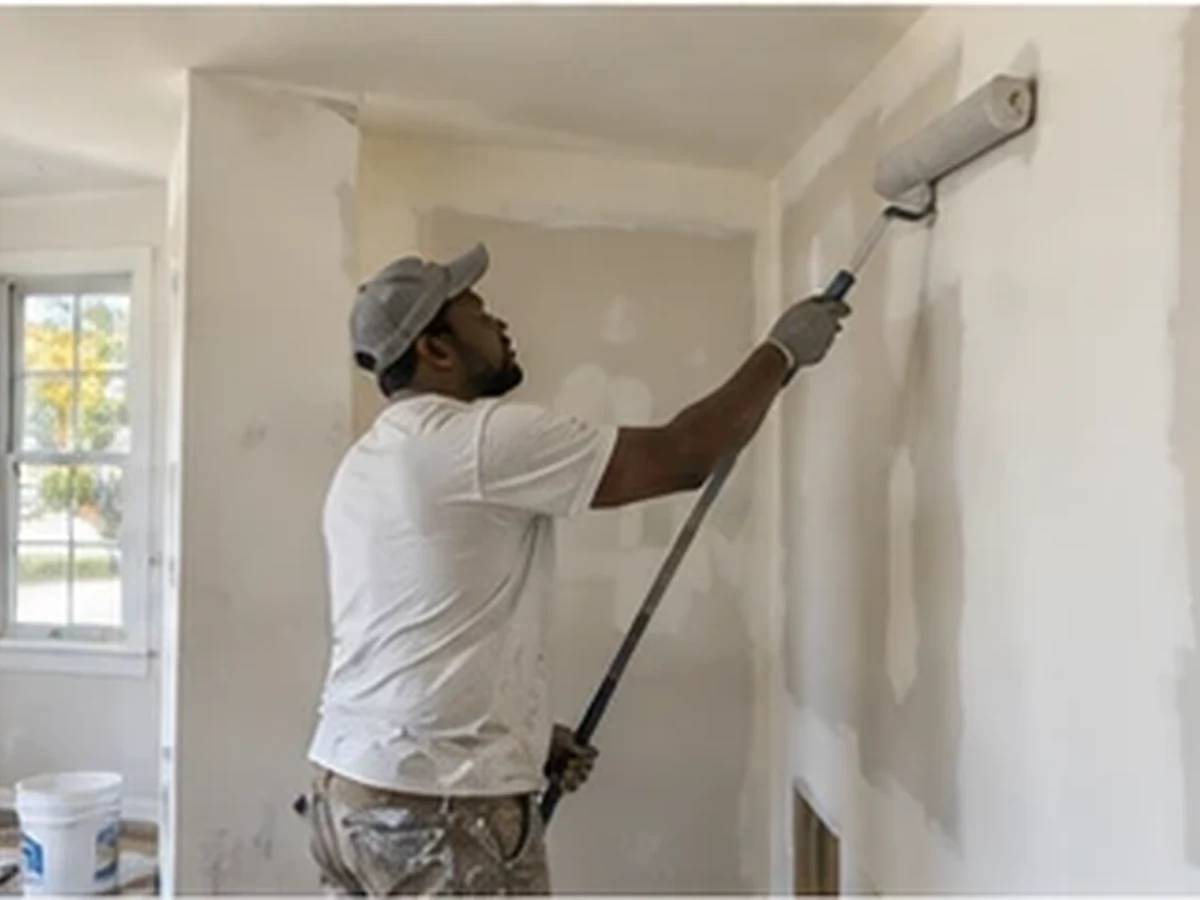
A painter rolling a finish coat onto an interior wall beside a freshly cased doorway

Rental Property Services and Repairs Across DC, Maryland and Northern Virginia

The repairs your maintenance staff never get to, and a remodeler will not bother with, are our work. Each item is written down with its own price.

Rental Property Services We Handle

Bigger than a maintenance ticket, smaller than a renovation. Move-out damage is listed item by item, each with its own price, so nothing hides in a total.

Walls

Drywall damage and wall repairs, ready for paint.

Ceilings

Ceiling marks, cracks and damaged sections repaired.

Paint

Repaired areas painted to match, or rooms repainted.

Floors

Damaged flooring sections repaired or replaced.

Doors and Trim

Doors, jambs, casing and baseboard repaired.

Carpentry and Fixtures

Cabinet parts, shelving, closet doors and fixtures fixed or replaced.

Why Property Managers Use Our Rental Property Services

Between Ticket and Renovation
The repairs your maintenance staff cannot get to and a remodeler will not bother with.
Grouped Into One Visit
A list of small repairs is scoped as one job instead of five separate calls.
Interior Only
Walls, ceilings, paint, floors, doors, trim, carpentry and fixtures. No plumbing, HVAC or roofing.

Before the Repair List Gets Priced

Is my list too small?

Call with it. Small repairs are scoped as one job instead of five calls.

Can I use the bill for the deposit?

Move out damage is listed item by item with its own price. How you apply it to the deposit is between you, the lease and local law. Deposit rules in DC, Maryland and Virginia.

What if a tenant still lives there?

We work in vacant units. Tell us and we will say if we can take it.

What if it breaks again?

Our work carries a 60 to 90 day warranty, depending on the job. The scope says which term applies.

When Rental Repairs Stack Up Around DC

The average first freeze in Washington is around November 12, and water and freezing damage are about 22 percent of all home insurance claims. Once the source is fixed, the wall and ceiling repairs go on one list. See how to cut damage between tenants.

Walkthroughs Scheduled 7 Days A Week

Clear the Repairs That Keep Getting Pushed

List what has been waiting. We price the whole list on one visit.

Send Your Repair List

Pricing your repair list costs you nothing. Each item is written down and priced before we fix anything.

How the Project Runs

  1. 1Send the list of repairs and the property address.
  2. 2We look at each item in person and confirm what the repair actually is.
  3. 3You approve one price for the whole list.
  4. 4We complete the list in one visit where the work allows it.

How we work

Our position on move-out damage

Every piece of damage goes on the scope as its own priced line. Holding that itemized record makes the deposit decision yours to make on paper, while how much you may keep is set by the lease and the deposit law where the unit sits.

  • We work in vacant units. If a tenant is still living there, ask first and we will say whether we can take it.

Rental Property Repairs Questions We Get Asked

Do you work in occupied units?

⌄
We work in vacant units. If a tenant is in place, ask and we will say whether we can take it.

Is there a minimum job size?

⌄
Call with the list. We will tell you straight whether it makes sense.

Do you do plumbing, HVAC or roofing?

⌄
No. Those are separate trades. We handle the interior repairs.

How much do move-out repairs cost?

⌄
It depends on the damage. Each item is priced separately after the walkthrough.

Read the full cost guide

Can you give me something for the deposit?

⌄
You get a written scope listing each item of damage and its repair. Deposit use is between you, the lease and local law.

What is a turnover fee on an apartment?

⌄
It is a charge some leases or management agreements set for preparing a unit between tenants. Whether one applies, and how much, comes from the lease and local law, not from us. What we price is the repair work itself, item by item, after a walkthrough.

How do I stop the same damage next time?

⌄
A few small fixes at turnover, like door stops and proper anchors, cut repeat damage.

Read the full cost guide

Who pays for a unit turn, the property or the outgoing tenant?

⌄
The property owner pays for the turn and pays us. The outgoing tenant can be charged through the security deposit, but only for damage beyond ordinary wear and tear, itemized within the deadlines in DC, Maryland or Virginia. Our scope lists each repair and its price separately, which makes it easier to tell the tenant damage from the normal wear.

How do you handle a unit left in bad condition by the last tenant?

⌄
The same way as any other unit, with a longer list. We walk it room by room, write each piece of damage down with its repair and price, and you decide what gets done now. Heavy damage often means a full repaint and new flooring in a room instead of touch-ups. Belongings left behind should be cleared first, so every wall and floor can be seen at the walkthrough.

How do repair costs get estimated before a turn starts?

⌄
By walking the unit, not from a phone call or photos. We look at every wall, ceiling, floor, door and fixture, write down each item and its repair, and send the written price 24 to 48 hours after the walkthrough. The walkthrough and the estimate are free, and nothing starts until you approve.

What repairs does a vacant unit usually need before it can be shown?

⌄
Whatever a prospect would notice on a ten-minute tour. Holes and scuffs in the walls, a stained ceiling, a damaged floor plank, a closet door off its track, a missing towel bar or blind, and a cabinet door that hangs crooked are the usual ones. Each one tells the renter the unit was not finished.

Who inspects the unit and writes the repair list at move out?

⌄
You or your manager run the move-out inspection, because it is tied to the deposit and the tenant may have the right to attend. We do the repair walkthrough, which can be the same day, and turn what we find into a written scope with a price per item. Our move-out inspection checklist guide covers what to record.

Why do repair lists keep growing after the first walk through?

⌄
Usually because the first walk happened with the old tenant's things still in the unit, or was done from the doorway. Furniture hides wall damage, rugs hide floor damage, and a ceiling stain can hide wet board above it. We walk the empty unit with every room, closet and appliance open. Damage hidden inside a wall or floor can still turn up, and it comes to you as a written change before work goes on.

How do you handle a unit that needs repairs beyond a normal turn?

⌄
We say so at the walkthrough, before anything is priced as a simple turn. Large wall and ceiling sections, flooring across whole rooms, and broken doors and trim are still ours. Plumbing leaks, electrical circuits, structural damage and remodels are not, and we name the trade the unit needs first so we can finish the rooms after it.

Can a turn company document repairs with photos before and after?

⌄
The record we give on every unit is the written scope, listing each item, its repair and its price, plus a written change for anything found later. For the deposit file, photograph each item yourself at the move-out inspection, before any repair starts, because the 45-day deposit deadline runs from move-out.

Who can fix a unit on short notice after a failed inspection?

⌄
Send us the inspection report. When the failed items are walls, doors, floors or fixtures, they are our work, whether the inspection came from DC, Montgomery County, Prince George's County or Alexandria. We walk the unit, next day when the calendar has room, and price each failed item in writing. Items for a plumber or electrician we point out, so you can book them alongside us.
★ 5.0 on Google · 4 reviewsBonded & insuredSince 202060 to 90 day warranty on our workOur turnover standard →