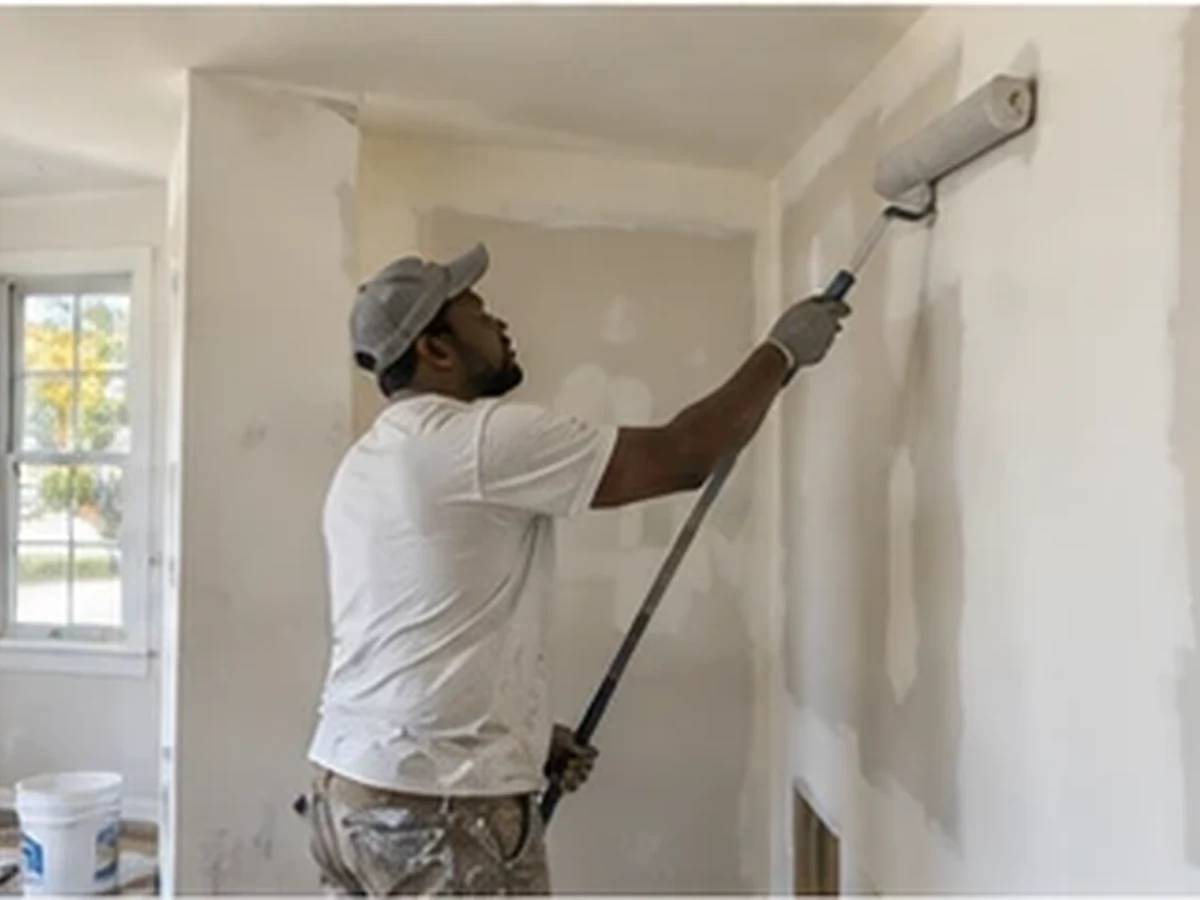
Drywall and Wall Repair for Rental Units
TV mount holes, a door knob through the board and dents down the hallway get patched, dried, sanded and primed, so the repair disappears under paint.
Wall Repair in a Turnover
Wall damage is the most common turnover line. A patch that is not flat and blended shows through the paint.
Small Holes
Nail, screw and anchor holes filled and sanded flat.
Door-Knob Holes
Holes behind doors patched, and a door stop added so it does not happen again.
Larger Damage
Damaged sections cut out and replaced with new board.
Corners
Dented or cracked corner bead repaired.
Water Marks
Stained sections sealed or replaced once the source is fixed.
Blend for Paint
Repairs finished to blend so paint hides them.
Why Property Managers Send Us Drywall & Wall Repair
- Patches That Disappear
- A patch is finished flat and primed so paint hides it under window light.
- Every Hole on One Scope
- Nail holes, anchor holes, door-knob holes and dents across the whole unit, priced together.
- Stops the Repeat
- Door stops go in behind the doors that caused the holes, so the next tenant does not repeat them.
Before the Walls Get Patched
Will the patches show?
No. Repairs are finished flat and primed, so paint hides them in window light. Why patches show through paint.
Will the door knob hole be back next lease?
We patch it and add a door stop.
Will a wet wall get painted over?
No. Water stained drywall is repaired once the source is fixed. If it still leaks, we tell you.
Drywall in Turn Season Around DC
In the run up to the August peak in moves, drying time is the part of the schedule you cannot buy back: each coat usually dries overnight. Get every damaged wall on the scope so it starts first. See how long each stage takes.
Get the Wall Damage Patched Before Paint
Tell us the holes you know about and we will find the rest. Each is finished flat and primed for paint.
Request a Wall Repair Walkthrough
Free to have the walls looked at and priced. Every patch is on the written scope before the first one is cut.
How the Project Runs
- 1We mark every damaged area in every room.
- 2Small holes are filled, larger damage is cut out and replaced with new board.
- 3Repairs get enough coats and drying time to finish flat.
- 4Everything is sanded and primed so it is ready for paint.
How we work
Why our patches do not show
Each patch gets enough coats and drying time to finish flat, then primer, before paint goes on. Skipping the primer is why patches flash, so we wait for the compound instead of painting over it wet.